
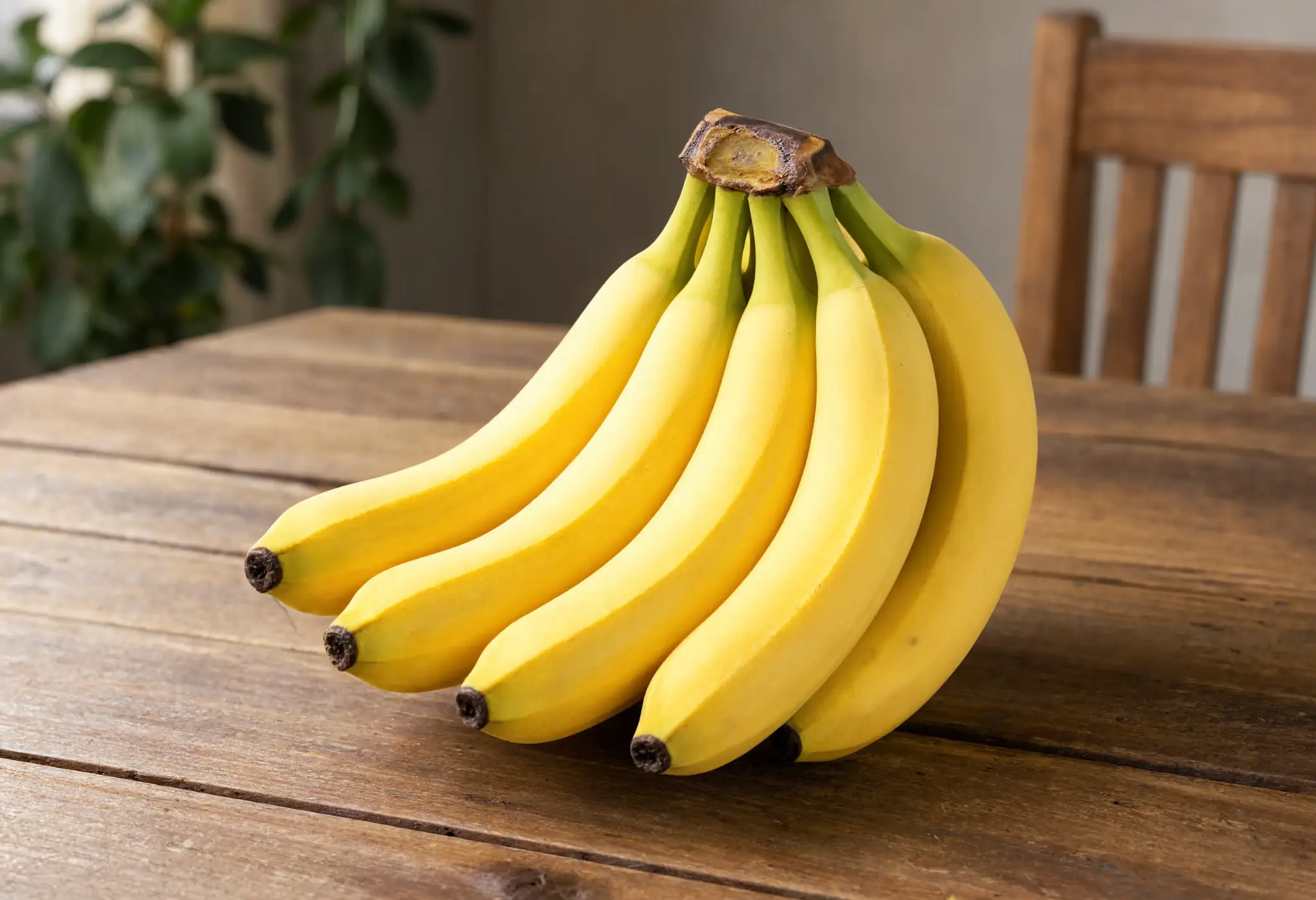
The banana is the most consumed fruit in Brazil and one of the most popular worldwide. Convenient, flavorful, and affordable, it is a staple in the breakfasts and daily snacks of millions of people. However, individuals diagnosed with Chronic Kidney Disease (CKD) or those tracking routine lab work with a nephrologist almost always hear the same warning: "Be careful with bananas because of the potassium."
But are bananas truly a villain for your kidneys? Renal medicine provides a clear answer: for people with healthy kidneys, bananas are an excellent ally for renal health; however, for those with significant loss of kidney function, they can pose a risk due to potassium accumulation in the blood.
A medium banana contains between 350 mg and 450 mg of potassium—accounting for up to 25% of the daily allowance for a patient undergoing hemodialysis. Understanding this number can make all the difference in your treatment.
1. Healthy Kidneys: Why Bananas Help Protect Kidneys
For individuals without renal issues, the idea that bananas "overload the kidneys" is a complete myth. On the contrary, regular banana consumption indirectly helps prevent long-term kidney injury.
The Protective Effect of Potassium and the DASH Diet
Bananas are globally recognized for their high potassium content, an essential mineral that promotes blood vessel relaxation and the elimination of excess sodium through urine.
- Blood Pressure Control: Hypertension is the second leading cause of kidney failure worldwide. The potassium in bananas counteracts the harmful effects of dietary sodium, protecting nephrons from hemodynamic wear and tear.
- Kidney Stone Prevention: Potassium in fruits like bananas reduces calcium excretion in the urine. With less free calcium in the urinary tract, the formation of calcium oxalate crystals—the most common type of kidney stone—decreases.
2. The Chronic Kidney Disease Scenario: The Danger of Hyperkalemia
When an individual develops Chronic Kidney Disease (especially starting from Stage 3b, when the glomerular filtration rate drops below 45 mL/min), the organ's ability to excrete minerals through urine becomes compromised.
At this point, the potassium in bananas shifts from being a protector to a genuine threat.
Why Is High Potassium Dangerous?
When diseased kidneys cannot filter out excess potassium, it begins to accumulate in the bloodstream—a clinical condition known as hyperkalemia (serum potassium above 5.0 to 5.5 mEq/L).
⚠️ Warning Sign
Hyperkalemia is a silent danger. At elevated levels, potassium alters the heart's electrical conduction, potentially causing:
- Numbness in the lips and limbs
- Severe muscle weakness
- Dangerous cardiac arrhythmias
- In extreme cases: sudden cardiac arrest
A single medium banana contains between 350 mg and 450 mg of potassium. For a hemodialysis patient with a target maximum of 2,000 mg/day, this represents 20% to 25% of their entire daily allowance.
3. Types of Bananas and Their Nutritional Profiles
Not all bananas share the same mineral and carbohydrate composition. For renal patients or anyone needing to control potassium and blood sugar (such as diabetics), understanding these variations is essential.
| Banana Type (100g) | Potassium (mg) | Phosphorus (mg) | Glycemic Index | Clinical Profile |
|---|---|---|---|---|
| Banana Nanica (Caturra) | ~370 mg | ~22 mg | Medium | High potassium content. Requires caution in advanced CKD. |
| Banana Prata | ~358 mg | ~24 mg | Medium | Slightly lower in potassium, but still high risk for hyperkalemia. |
| Banana Maçã | ~330 mg | ~20 mg | Low to Medium | One of the lowest-potassium options. Good digestibility. |
| Banana da Terra (Cooked) | ~490 mg | ~30 mg | Medium | Extremely high in potassium. Cooking and discarding the water partially reduces it. |
| Green Banana (Raw) | ~340 mg | ~25 mg | Low | Rich in resistant starch. Use as biomass in controlled doses. |
4. Green Banana Biomass: Ally or Enemy of the Kidney?
Green banana biomass has become a very popular functional food. It is prepared by pressure-cooking unripe green bananas and blending the pulp. For renal patients, this food has two sides that must be balanced:
- ✅ The Benefit (The Gut-Kidney Axis): Green bananas are one of the greatest natural sources of resistant starch—a prebiotic fiber that nourishes beneficial gut bacteria. In kidney patients, a healthy microbiota reduces the production of uremic toxins (such as indoxyl sulfate and p-cresyl sulfate), which accelerate CKD progression.
- ⚠️ The Caution (Potassium Is Still There): Cooking green bananas with their peels on retains nearly all the original potassium in the pulp. Biomass must be accounted for by your renal dietitian—generally limited to 1 tablespoon per day for patients on potassium restrictions.
5. Consumption Guidelines According to Renal Stage
The decision to restrict, limit, or permit bananas depends strictly on the stage of renal function (Glomerular Filtration Rate — GFR) and the patient's lab results.
| Renal Stage | GFR | Recommendation | Special Precautions |
|---|---|---|---|
| Healthy Kidneys / Prevention | > 90 mL/min | Permitted (1–2 units/day) | Excellent for blood pressure control and kidney stone prevention. |
| CKD Stages 1 to 3a | 45–89 mL/min | Permitted in moderation (1 unit/day) | Monitor serum potassium. No strict restriction needed if potassium is normal. |
| Advanced CKD (3b, 4, and 5) | < 45 mL/min | Restricted / half a unit or alternate days | Target quota of ~2,000 mg/day of potassium. Substitute with low-potassium fruits from our guide. |
| Hemodialysis Patients | No residual function | Strict restriction | Only with authorization from your renal dietitian, preferably on dialysis days. |
| Peritoneal Dialysis Patients | Continuous removal | More flexible | Peritoneal dialysis removes potassium daily, allowing greater flexibility than hemodialysis. |
💡 Technique to Reduce Banana Potassium (Leaching)
- Slice the banana thinly (preferably slightly firm or plantain/da terra).
- Cook in a pot with plenty of boiling water for 5 to 10 minutes.
- Completely discard the cooking water—potassium is water-soluble and migrates into the liquid.
- Use the cooked slices in recipes. This process can reduce potassium content by 20% to 40%.
Frequently Asked Questions
Are bananas bad for your kidneys?
For individuals with healthy kidneys, no—on the contrary, they protect the kidneys by helping control blood pressure. For patients with advanced CKD (GFR below 45 mL/min) or on hemodialysis, their high potassium content can cause hyperkalemia, a dangerous condition for the heart.
Can a hemodialysis patient eat bananas?
They should avoid them or consume them only with authorization from their renal dietitian. A medium banana accounts for up to 25% of the permitted daily potassium allowance (~2,000 mg/day). On hemodialysis session days, there is a slightly larger margin because dialysis removes excess potassium.
Which banana has the least potassium?
Banana Maçã has the lowest content (~330 mg/100g), followed by raw green banana (~340 mg/100g). Cooked plantain (Banana da Terra) has the highest content (~490 mg/100g). Regardless, all varieties contain significant potassium and must be accounted for in a renal diet.
Is green banana biomass good for kidney disease?
It can be beneficial due to its prebiotic effect (resistant starch), which helps reduce uremic toxins. However, even biomass contains potassium. Quantities must be guided by your renal dietitian—typically up to 1 tablespoon per day for restricted patients.
What can I eat instead of a banana if I have high potassium?
Fruits with lower potassium content include: apples, pears, blueberries, strawberries, guava, and grapes. All contain less than 220 mg of potassium per 100g—approximately half of what a banana contains.
"Bananas are not a forbidden food—they are a food that requires clinical context. If you have healthy kidneys, eat bananas. If you have CKD, let your potassium lab results guide your decision, not fear."
— Nephrologist consulted by the Renal Expert Editorial Board
Practical Message: What to Do Now
- If you have healthy kidneys: You can eat bananas daily without fear. They protect your heart, help control blood pressure, and prevent kidney stones.
- If you have Chronic Kidney Disease: Bananas are not a "forbidden poison," but they are a concentrated source of potassium. Consumption must be measured according to your laboratory blood tests. If your potassium is elevated, substitute bananas with low-potassium fruits selected from our guide of 50 foods good for the kidneys.
Content prepared by the Renal Expert Editorial Board based on guidelines from the Brazilian Society of Nephrology (SBN), the National Kidney Foundation (NKF), and KDIGO. This does not replace individualized medical or nutritional consultation.
How we review this article
Publication and revision history
This article was published on July 20, 2026, and updated on July 20, 2026.
Reviewed by the Renal Expert Editorial Board.
Sources and References
- Brazilian Society of Nephrology (SBN): Food composition tables and nutritional guidelines for potassium control in Chronic Kidney Disease.
- National Kidney Foundation (NKF — Kidney.org): Guidelines for nutritional management of hyperkalemia and dialytic diet potassium counting.
- KDIGO (Kidney Disease: Improving Global Outcomes): Clinical practice guidelines for the evaluation and management of CKD and cardiovascular risk factors.
- Source: Brazilian Food Composition Table (TBCA/USP): Analytical micronutrient data across various Brazilian banana cultivars.